
Building a digital presence requires more than just a digital storefront. For service providers, your homepage acts as a vital authority hub that signals your expertise to search engines. By refining your SEO for small business, you create a clear path for potential clients to find your services.
A well-organized layout helps you improve local SEO rankings by making your offerings easy to navigate. When you provide clear information, you build immediate trust with your audience. This foundation is the first step toward dominating competitive markets.
If you need expert guidance, reach out to us at 0431 367 724 or email info@rh-designs.com.au. Applying these proven local SEO tips ensures your brand remains visible to those who need your help the most. Start planning your digital growth today to secure long-term success.
Key Takeaways
- Your homepage must function as a central hub to establish authority.
- Professional contact details build immediate trust with new clients.
- Strategic planning is essential for achieving higher search visibility.
- Consistent optimization helps service businesses stay competitive in their area.
- Clear navigation improves the overall experience for your visitors.
Understanding the Importance of Website Content
Your website content acts as the digital storefront for your service business in Australia. It serves as the primary touchpoint where potential clients evaluate your credibility and professionalism. By prioritizing a local seo website structure, you ensure that your business remains visible to those searching for services in your specific area.
Why Content Matters for Service Businesses
For service-based companies, content is the bridge between a user’s initial search and their final decision to book. Google relies on consistent information to verify your business legitimacy. Maintaining strict NAP (Name, Address, Phone) consistency across all digital platforms is a vital component of effective local SEO tips.
When your content is accurate and easy to navigate, search engines reward your site with higher rankings. A well-planned SEO-friendly website structure helps search crawlers understand your service areas and offerings. Consider these essential elements for your site:
- Clear and consistent business contact details on every page.
- Dedicated service pages that address specific local needs.
- Accurate location data that matches your Google Business Profile.
Enhancing Customer Engagement Through Content
Engagement is not just about traffic; it is about building trust with your audience. When a visitor lands on your site, they should immediately find the answers they need to solve their problems. High-quality, relevant content encourages users to stay longer and explore your service options.
Implementing a thoughtful SEO-friendly website structure allows you to guide visitors through a logical journey. By following these local SEO tips, you can turn passive browsers into active leads. Remember that your content should always focus on the user experience while maintaining a robust local seo website structure to support your growth.
Identifying Your Target Audience
Connecting with your local community requires more than just a digital presence; it demands a clear picture of your ideal client. When you know exactly who you are serving, you can tailor your messaging to resonate with their specific challenges. This focused approach is a cornerstone of effective local search engine optimization.
Creating Customer Personas
A customer persona is a semi-fictional representation of your ideal buyer based on data and research. By documenting their age, location, and professional background, you gain valuable insights into how they interact with your brand. This practice helps you refine your local seo website structure to ensure that the right information reaches the right people at the right time.
Consider the specific needs of residents in your service area. Whether you are a plumber in Sydney or a consultant in Melbourne, your content should reflect the unique environment of your clients. Using these local SEO tips, you can create content that feels personal and relevant to your immediate neighborhood.
Understanding Their Needs and Pain Points
Every customer comes to your website with a specific problem that needs an urgent solution. By mapping out these pain points, you can align your service descriptions with the actual intent of your visitors. This strategy ensures that your website acts as a helpful resource rather than just a digital brochure.
The following table outlines how different customer segments might interact with your business based on their primary motivations:
| Customer Segment | Primary Pain Point | Desired Outcome |
|---|---|---|
| Busy Homeowner | Lack of time for repairs | Fast, reliable service |
| Small Business Owner | Budget constraints | Cost-effective solutions |
| New Local Resident | Unfamiliarity with providers | Trust and social proof |
| Emergency Caller | Immediate crisis | Rapid response time |
Focusing on these specific needs allows you to build trust before a customer even makes contact. When your content directly addresses the anxieties of your audience, you significantly increase the likelihood of conversion. Always prioritize clarity and empathy to turn casual visitors into loyal, long-term clients.
Setting Clear Objectives for Your Website
Defining clear objectives is the foundation of any high-performing digital presence for service providers. Without a roadmap, your website remains a static brochure rather than a dynamic tool for growth. By establishing specific targets, you ensure that every page serves a distinct purpose in your broader business strategy.
Defining Success Metrics
To measure your progress, you must identify the key performance indicators that matter most to your operations. For many Australian service businesses, success is measured by tangible actions such as phone calls, online booking requests, or contact form submissions. Tracking these metrics allows you to see exactly how your site contributes to your bottom line.
Implementing local SEO best practices is essential for capturing the right audience in your specific service area. When you monitor your conversion rates, you can refine your approach to improve local SEO rankings and attract more qualified leads. Consider the following metrics to track your performance:
- Total number of inbound phone calls from the website.
- Conversion rate of visitors to booked appointments.
- Growth in organic search traffic from local keywords.
Aligning Content with Business Goals
Your content strategy should directly support your primary business objectives. An effective SEO structure ensures that search engines understand your services while providing users with the information they need to make a decision. Every piece of content you publish should guide the visitor toward a specific call to action.
“A goal without a plan is just a wish. When your website content is aligned with your business objectives, it transforms into a powerful engine for sustainable growth.”
By focusing on an effective SEO structure, you create a seamless experience that builds trust with potential clients. This alignment helps you improve local SEO rankings by signaling to search engines that your site is a relevant, authoritative resource. Ultimately, adhering to local SEO best practices ensures that your digital efforts translate into real-world business success.
Content Types You Should Consider
Your website serves as the digital storefront for your services, requiring a strategic mix of content to attract and convert visitors. By maintaining an SEO-friendly website structure, you ensure that every piece of information is easily discoverable by both potential clients and search engines. Dedicating specific pages to individual services prevents keyword cannibalization and helps your business rank for relevant search queries.
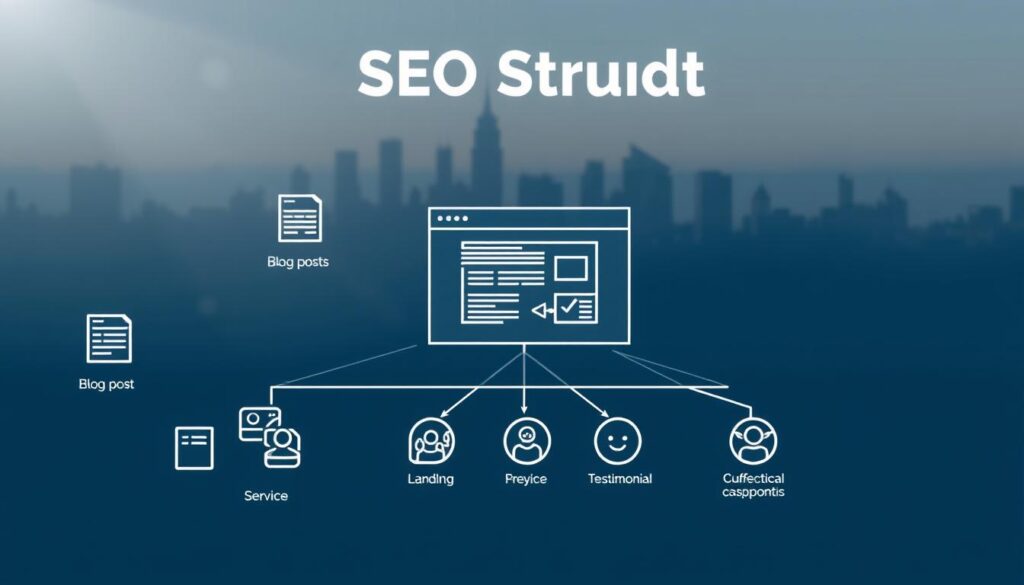
Informative Blog Posts
Educational blog posts are the backbone of a strong content strategy. They allow you to address common questions and demonstrate your industry expertise. By incorporating local SEO best practices, you can target specific geographic areas, making it easier for nearby customers to find your services when they need them most.
Engaging Case Studies
Case studies provide tangible evidence of your success. They move beyond simple claims by showing exactly how you solved a problem for a previous client. An effective SEO structure ensures these success stories are indexed properly, allowing prospects to see the real-world impact of your work.
“Trust is the currency of the service industry. When you share authentic stories of your work, you aren’t just selling a service; you are building a relationship with your future clients.”
Testimonials and Reviews
Social proof is vital for converting visitors into paying customers. Displaying genuine reviews helps validate your reputation and builds immediate credibility. When potential clients see positive feedback from others, they feel more confident in their decision to hire your business.
| Content Type | Primary Goal | SEO Benefit |
|---|---|---|
| Blog Posts | Education | Targeting long-tail keywords |
| Case Studies | Demonstrating Results | Building domain authority |
| Testimonials | Building Trust | Improving conversion rates |
Building a Content Strategy
Building a sustainable content strategy requires more than just writing; it demands a structured approach to planning and execution. By organizing your efforts, you ensure that your business maintains a consistent voice while reaching your target audience effectively. A well-defined plan serves as the foundation for long-term growth and digital authority.
Content Calendar Creation
A content calendar is an essential tool for any service business looking to stay organized. It allows you to map out topics, deadlines, and publication dates well in advance. This proactive approach prevents the stress of last-minute brainstorming and ensures your website receives regular, high-quality updates.
Consistency is key to building trust with both your customers and search engines. When you follow a set schedule, you demonstrate reliability and professionalism. Planning your content in advance also gives you the flexibility to align your posts with seasonal trends or specific business promotions.
Incorporating SEO Best Practices
To maximize your visibility, you must integrate local SEO best practices into your planning process. This involves targeting specific geographic keywords that resonate with your local Australian customer base. By focusing on these terms, you make it easier for nearby clients to find your services when they need them most.
Implementing an effective SEO structure is equally important for maintaining your site’s health. This means organizing your pages logically so that search engines can crawl and index your content without difficulty. A clean, well-structured website signals to Google that your business is a credible and authoritative source.
Finally, prioritize local search engine optimization to capture high-intent traffic in your area. By combining a clear content calendar with an effective SEO structure, you create a powerful engine for growth. Adhering to these local SEO best practices will help your business stand out in a competitive digital landscape.
Crafting Compelling Service Descriptions
Your service descriptions serve as the primary bridge between your expertise and the needs of your local clients. When a potential customer lands on your page, they are looking for solutions to specific problems. By focusing on how you solve these issues, you create a stronger connection that encourages them to choose your business over competitors.
Effective writing is a key component of optimizing local SEO. When you clearly articulate what you offer, search engines can better understand your relevance to local search queries. This clarity helps you improve local SEO rankings by matching the specific intent of users in your area.

Highlighting Benefits Over Features
Many businesses make the mistake of listing technical specifications without explaining why they matter. A feature is what your service does, but a benefit is how it improves the customer’s life or business. For example, instead of saying you use high-end software, explain that your tools save the client time and reduce their operational costs.
Focusing on benefits allows you to speak directly to the pain points of your audience. This approach builds trust and demonstrates that you understand their unique challenges. When you prioritize value, you naturally incorporate terms that help improve local SEO rankings for service-based searches.
Using Clear and Concise Language
Complexity often leads to confusion, which can drive potential clients away from your website. Use simple, direct language that is easy for anyone to understand. Avoid industry jargon that might alienate a customer who is not familiar with the technical side of your work.
Clear communication is vital for optimizing local SEO because it keeps visitors on your page longer. When users find the information they need quickly, they are more likely to convert into paying clients. Keep your sentences short and your paragraphs focused on one main idea to maintain high engagement levels.
| Feature-Focused | Benefit-Driven | Customer Impact |
|---|---|---|
| 24/7 server monitoring | Peace of mind for your business | Reduced downtime |
| Advanced plumbing tools | Fast, non-invasive repairs | Less property damage |
| Custom software coding | Tailored solutions for your workflow | Increased productivity |
Utilizing Visual Content Effectively
High-quality imagery transforms a standard website into a compelling digital storefront. When potential clients visit your site, they look for proof of your expertise and professionalism. Visual assets provide that immediate validation, helping to build trust before a customer even reads your service descriptions.
Types of Visual Content to Include
To capture attention, you should diversify the media on your pages. High-resolution photographs of your team in action or completed projects in local neighborhoods are highly effective. These images help in optimizing local SEO by signaling to search engines that your business is active and relevant to specific geographic areas.
Consider incorporating the following types of visual content:
- Professional photography: Authentic shots of your staff and workspace.
- Short-form videos: Quick demonstrations of your services or client testimonials.
- Infographics: Visual representations of complex processes or service benefits.
- Before-and-after galleries: Clear evidence of the value you provide to clients.
Best Practices for Image and Video Usage
While visuals are vital, they must not compromise your site speed. Large, uncompressed files can frustrate users and hurt your search rankings. Always compress your images and host videos on external platforms to maintain an SEO-friendly website structure that keeps performance high.
Proper file naming and the use of descriptive alt text are also essential for accessibility and search visibility. By following these technical standards, you ensure that your media contributes to a seamless user experience. The table below outlines how different visual formats impact your site performance and engagement levels.
| Visual Format | Primary Benefit | Impact on Speed | Engagement Level |
|---|---|---|---|
| Compressed JPEGs | Fast loading | Minimal | High |
| Embedded Videos | High trust | Moderate | Very High |
| SVG Icons | Scalability | Negligible | Medium |
| Animated GIFs | Visual interest | High | Medium |
Promoting Your Content
Once your content is live, the real work of reaching your local audience begins. Simply publishing articles or case studies is rarely enough to capture the attention of potential clients in a competitive market. You must actively distribute your message to ensure it reaches the people who need your services most.
Social Media Strategies for Service Businesses
Social media platforms offer a powerful way to connect with your community and build brand recognition. By sharing helpful tips or local success stories, you establish your business as a trusted authority in your field. Engaging with local groups and tagging relevant community partners can significantly boost your visibility.
Consistency is key when managing your social presence. Focus on platforms where your target audience spends their time, such as Facebook or LinkedIn. These interactions are vital for optimizing local SEO, as they drive traffic back to your site and signal to search engines that your business is active and relevant.
Email Marketing Campaigns
Email marketing remains one of the most effective tools for nurturing long-term relationships with your clients. By sending regular newsletters, you keep your brand top-of-mind for past and future customers. This strategy is essential for encouraging repeat business and building a loyal following.
Personalized emails that address specific pain points can turn casual readers into dedicated clients. When you combine these efforts with a focus on local search engine optimization, you create a comprehensive digital footprint. Use the following table to understand how different channels contribute to your growth.
| Channel | Primary Goal | Audience Reach | Impact Level |
|---|---|---|---|
| Social Media | Community Engagement | Broad/Local | High |
| Email Marketing | Lead Nurturing | Existing/Warm | Very High |
| Local Directories | Visibility | High Intent | Medium |
Ultimately, your promotional efforts should feel authentic and helpful. Always prioritize value over aggressive sales tactics to maintain a professional reputation. By staying consistent across all channels, you will see steady improvements in your search rankings and overall business growth.
Analyzing and Improving Your Content
You cannot improve what you do not measure, which is why tracking your site’s performance is a critical business task. By consistently reviewing how your pages perform, you gain the insights needed to maintain a competitive edge in the Australian market. This process ensures that your digital presence remains aligned with your evolving business goals.
Tools for Tracking Performance
To effectively monitor your progress, you must utilize the right set of diagnostic tools. Start by implementing the SEO starter guide principles to ensure your tracking is accurate and compliant with industry standards. Many successful businesses rely on a combination of analytics platforms to capture a complete picture of their traffic.
- Google Search Console: Essential for monitoring indexing status and search queries.
- Geo-grid Trackers: These provide a visual map of your local search visibility across specific suburbs.
- Heatmap Software: Useful for understanding how visitors interact with your page elements.
Making Data-Driven Adjustments
Once you have gathered sufficient data, the next step is to refine your website structure for SEO to address any identified weaknesses. If your rankings are slipping in specific regions, you may need to adjust your website layout for local SEO to better highlight your service areas. Small, calculated changes often lead to significant improvements in user experience and search rankings.
Consistency is key when applying these updates. Use the following table to prioritize your improvement efforts based on common performance indicators:
| Metric | Action Required | Expected Outcome |
|---|---|---|
| High Bounce Rate | Improve page load speed | Increased user retention |
| Low Local Ranking | Optimize local landing pages | Higher map pack visibility |
| Poor Click-Through | Rewrite meta descriptions | More organic traffic |
By regularly auditing your site, you ensure that your website structure for SEO remains robust against algorithm updates. Furthermore, optimizing your website layout for local SEO helps you capture high-intent traffic from your target audience. Always base your future content decisions on the hard data you collect rather than guesswork.
Ensuring Consistent Brand Voice
Your brand voice acts as the heartbeat of your digital presence, connecting you directly to your Australian audience. When your messaging remains steady, you foster deeper trust and improve the overall user experience for your visitors. A unified tone ensures that every interaction feels like a natural extension of your business values.
Defining Your Brand’s Tone
To build a strong identity, you must first identify the personality traits that define your service business. Whether your approach is professional and authoritative or friendly and approachable, this tone should permeate every piece of content you create. Consistency is the key to making your brand memorable in a crowded marketplace.
Start by outlining your core values and the specific language that resonates with your target demographic. When you align your vocabulary with the expectations of your clients, you create a sense of familiarity. This clarity helps search engines understand your expertise, which is a vital component of a solid website structure for SEO.
Maintaining Consistency Across All Channels
Once you have established your voice, you must apply it across every digital touchpoint, from your social media profiles to your email newsletters. A fragmented brand identity can confuse potential customers and weaken your professional image. Unified messaging ensures that your audience recognizes your business instantly, regardless of where they find you.
Your website serves as the central hub for this identity, so it must reflect your voice in every layout choice. Implementing a thoughtful website layout for local SEO ensures that your brand identity remains strong and recognizable throughout the entire user journey. By keeping your design and tone in sync, you provide a seamless experience that encourages visitors to engage with your services.
Seeking Professional Help When Needed
Building a high-performing online presence requires technical precision and strategic insight. Managing every aspect of your digital footprint can overwhelm even the most dedicated business owners.
Professional guidance ensures your site remains competitive in a crowded market. Experts provide the technical oversight needed to optimize your website structure for SEO, ensuring search engines index your pages correctly.
Leveraging Specialized Expertise
Working with a dedicated team allows you to focus on your core services while specialists handle the complexities of your online architecture. A refined website layout for local SEO helps your business appear exactly when potential clients search for your specific offerings.
RH Designs brings years of experience in crafting digital environments that convert visitors into loyal customers. Our team understands the nuances of site performance and user experience.
Partnering for Long-Term Success
Investing in professional design and content management pays dividends through increased visibility and higher engagement rates. You can reach out to our team at 0431 367 724 to discuss your specific goals.
Send your inquiries to info@rh-designs.com.au to start a conversation about your project. A strong foundation today secures your position as a leader in your local industry for years to come.
FAQ
Why is the homepage layout so important for my local service business?
Your homepage serves as a local authority hub. To dominate search results, it must immediately communicate your expertise to Google and build trust with visitors. By prominently displaying professional contact details like 0431 367 724 and info@rh-designs.com.au, you establish legitimacy. A well-planned local seo website structure ensures that both users and search engines can easily navigate your most important information.
How does NAP consistency affect my search rankings?
Consistency in your Name, Address, and Phone number (NAP) is a critical component of local search engine optimization. Google uses this data to verify your business’s existence and location. When your NAP data is uniform across your site and third-party directories, it reinforces an SEO-friendly website structure and helps you satisfy rigorous verification requirements, ultimately improving your visibility.
How can I ensure my website content converts visitors into leads?
Success begins with identifying your target audience through detailed customer personas. By understanding the specific pain points of your local community, you can align your messaging with the intent of users searching for urgent services. This targeted approach to optimizing local SEO ensures your content speaks directly to the people most likely to book a service.
What metrics should I use to define the success of my local SEO efforts?
You should align your content strategy with measurable business goals, such as an increase in phone calls or online bookings. Implementing local SEO best practices means every page on your site serves a specific purpose. By tracking these conversions, you transform a basic site into a high-performing lead generation machine.
Why should I create a separate page for every service I offer?
Creating dedicated pages for each service is essential to avoid keyword cannibalization, where your own pages compete against each other in search results. An effective SEO structure requires one clear destination for each service, allowing you to rank higher for specific search queries while providing social proof through testimonials and case studies on those specific pages.
How does a content calendar contribute to long-term growth?
A content calendar keeps your marketing efforts organized and ensures your site remains active and authoritative. Regularly updating your blog or project gallery is a key part of an SEO-friendly website structure. It signals to Google that your business is active, which helps maintain and improve local SEO rankings over time.
What is the most effective way to write service descriptions?
Effective service descriptions focus on benefits over technical features. Instead of just listing what you do, explain how your service solves a problem for the client. Using clear, concise language to communicate your unique value proposition is one of the most practical local SEO tips for increasing your conversion rate.
How do images and videos impact my local search performance?
Visual content enhances user engagement and builds trust, especially when you showcase work performed in specific local neighborhoods. However, these assets must be optimized for fast load times to support mobile users. A strategic website layout for local SEO prioritizes speed and accessibility, ensuring visuals aid your rankings rather than slowing down your site.
How can I promote my content to reach a larger local audience?
Beyond your website, you should leverage social media for community engagement and local partnerships. Email marketing is also a powerful tool for nurturing leads and encouraging repeat business. Integrating these promotional efforts with your website structure for SEO helps build a recognizable brand presence throughout your service area.
How do I know if my local SEO strategy is actually working?
You can use specialized tools like geo-grid trackers to see a visual representation of your local search visibility across different neighborhoods. By analyzing this data, you can make informed, data-driven adjustments to your local seo website structure and address specific areas where your competitors might be gaining an advantage.
Why is a consistent brand voice necessary for SEO?
A unified brand voice across all digital touchpoints builds a sense of reliability and professionalism. When your tone is consistent, it reinforces your brand identity, making you more memorable to potential clients. A cohesive website layout for local SEO ensures that your brand’s personality is reflected in every piece of content, from the homepage to the smallest blog post.
When is the right time to hire a professional for my website strategy?
If your current site is not generating leads or if you are struggling to keep up with the complexities of site architecture, it is time to seek expert help. Professionals like the team at RH Designs understand the nuances of effective SEO structure. Contacting experts at 0431 367 724 or info@rh-designs.com.au can ensure your website is built on a solid foundation for long-term dominance in your local market.


