
Updating your digital presence is a critical step for any growing company. Understanding the typical website redesign cost australia market rates helps ensure your financial planning aligns with long-term goals.
Navigating these development complexities requires clear insight into industry standards. Whether you are planning a simple refresh or a full overhaul, having a reliable redesign quote is essential for your budget.
Our team provides professional guidance to help you make informed decisions. If you need expert advice, please call us at 0431 367 724 or send an email to info@rh-designs.com.au to discuss your project needs.
Key Takeaways
- Understand the financial scope before starting your project.
- Align your digital strategy with specific business objectives.
- Request a detailed quote to avoid hidden development fees.
- Contact professional designers for accurate market pricing.
- Prioritize long-term value over initial development savings.
Understanding Website Redesign Costs in Australia
When planning a digital transformation, understanding the variables that influence the website redesign cost Australia is a vital first step. Business owners often find that the final investment depends on the specific technical requirements and the overall complexity of the project. By breaking down these expenses, you can better align your budget with your long-term business goals.
Factors Influencing Redesign Costs
Several core elements dictate the total website redesign cost Australia. The size of your site, the need for custom functionality, and the integration of third-party software are primary drivers of the final price. A simple brochure site will naturally cost less than a complex platform requiring database management or custom API connections.
Furthermore, the level of design customization plays a significant role. Using pre-made templates is generally more affordable, while bespoke design work requires more hours from skilled developers and designers. Prioritizing your needs early in the process helps manage these costs effectively.
Importance of a Website Redesign
Maintaining a modern, functional website is critical for staying competitive in today’s fast-paced digital landscape. A dated site can negatively impact your brand perception and drive potential customers to your competitors. Investing in a professional overhaul ensures your business remains relevant and accessible to your target audience.
Beyond aesthetics, a redesign often improves site speed, security, and mobile responsiveness. These technical upgrades are essential for maintaining high search engine rankings and providing a seamless user experience. A well-executed project serves as a powerful marketing asset that supports your growth objectives.
Assessing Current Website Effectiveness
Before committing to a full project, you should conduct a thorough audit of your existing platform. This framework helps determine if a complete overhaul is necessary or if minor optimizations will suffice. You should evaluate your current conversion rates, bounce rates, and overall user engagement metrics.
| Project Scope | Complexity Level | Primary Cost Driver |
|---|---|---|
| Basic Refresh | Low | Content and UI updates |
| Standard Redesign | Medium | Custom features and SEO |
| Enterprise Overhaul | High | Database and API integration |
If your current site fails to meet modern performance standards, a full redesign is likely the most cost-effective long-term solution. Understanding the website redesign cost Australia allows you to make an informed decision that balances immediate expenses with future scalability.
Average Cost of Website Redesign
Determining the right budget for your online presence is a critical step for any Australian business owner. A clear grasp of the website redesign cost australia market allows you to set realistic expectations before starting your project.
Pricing Overview: Small vs. Large Businesses
The financial commitment for a digital overhaul varies greatly depending on the size and scope of your organization. Small local businesses often require streamlined, template-based solutions that focus on essential branding and contact information.
In contrast, large-scale corporate entities typically demand complex architectures, custom database integrations, and high-level security protocols. These differences in scope directly influence the final website redesign pricing you will encounter during the quoting process.
Hourly Rates of Web Designers
Professional web designers across Australia charge based on their experience, location, and technical expertise. Junior developers may offer lower rates, while senior specialists or boutique agencies command higher fees for their strategic input.
It is helpful to benchmark your quotes against these industry standards to ensure you receive fair value. Most professionals provide a detailed breakdown of hours to help you understand where your investment is being allocated.
Cost of Additional Features and Functionalities
Beyond basic design, adding advanced features can significantly shift your total budget. Custom integrations, such as CRM connectivity or complex e-commerce systems, require specialized development time.
Furthermore, high-end animations and interactive elements add a layer of sophistication that impacts the overall website redesign pricing. Carefully prioritizing these features ensures your project remains within your financial comfort zone.
| Project Complexity | Estimated Timeframe | Budget Range (AUD) |
|---|---|---|
| Basic Business Site | 2-4 Weeks | $2,000 – $5,000 |
| Mid-Range E-commerce | 6-10 Weeks | $6,000 – $15,000 |
| Custom Corporate Portal | 3-6 Months | $20,000+ |
Selecting a Web Design Agency
Your choice of a web design agency will ultimately determine the success and longevity of your new online presence. Finding a partner that understands your specific business goals is a pivotal step in ensuring your project remains on schedule and within your financial parameters.
Evaluating Agency Experience and Portfolio
When reviewing potential agencies, look closely at their past work to see if their design aesthetic aligns with your brand identity. A strong portfolio should demonstrate versatility across different industries and technical proficiency in modern web standards.
Do not just look at the visuals; investigate the functionality of their previous projects. Check if the sites they have built are fast, mobile-responsive, and easy to navigate. This technical due diligence ensures that the agency can deliver a site that performs as well as it looks.
Questions to Ask Your Potential Agency
To gauge their expertise and communication style, you must engage in a transparent dialogue. Prepare a list of strategic questions to uncover how they handle challenges and project management.
- How do you handle project timelines and potential delays?
- What is your specific process for gathering client feedback?
- Can you explain your approach to search engine optimization during the build?
- How do you ensure the final product is scalable for future growth?
“The quality of your website is a direct reflection of your brand’s commitment to its customers; choose a partner who values that connection as much as you do.”
The Role of Testimonials and Reviews
Verifying past client experiences is an essential part of building confidence in your final selection. Look for reviews that highlight consistent communication and the ability to meet deadlines, as these are often more important than the initial pitch.
Reach out to previous clients if possible to ask about their experience during the post-launch phase. An agency that maintains long-term relationships with its clients is usually a sign of reliability and high-quality service.
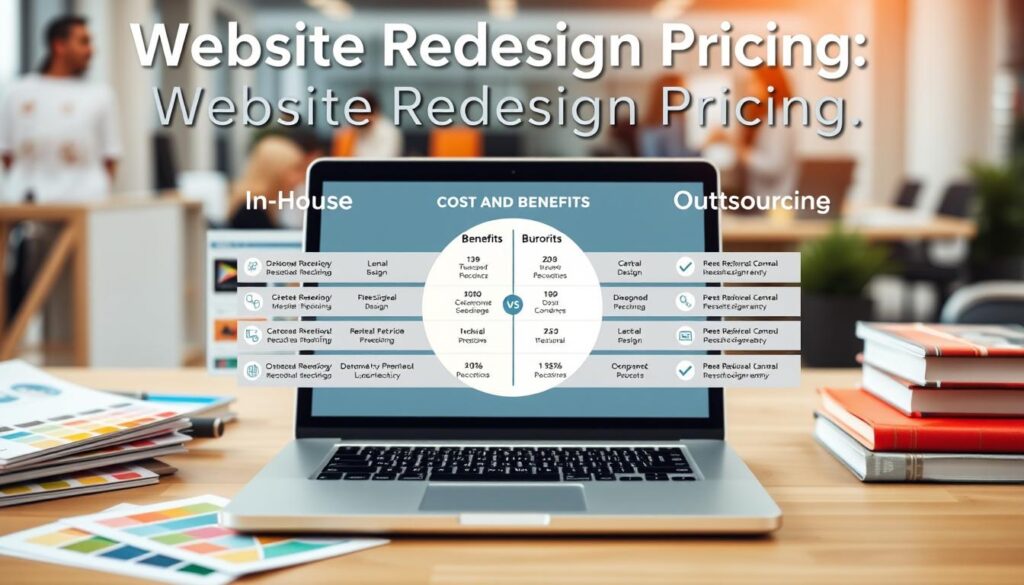
In-House vs. Outsourcing: Which is Cheaper?
Evaluating the true cost of a website redesign often leads to the classic debate: should you hire internally or outsource? This decision significantly impacts your overall website redesign pricing and the long-term success of your digital presence. Understanding the financial implications of each model is essential for Australian business owners aiming for efficiency.
Pros and Cons of In-House Teams
Maintaining an internal team offers a high level of control and immediate access to your staff. You can align the project closely with your company culture and internal workflows.
- Pros: Direct oversight, deep brand knowledge, and immediate availability for daily updates.
- Cons: High overhead costs including salaries, superannuation, equipment, and ongoing training.
However, the hidden costs of in-house talent often surprise business owners. You must account for recruitment time, employee benefits, and the potential need for specialized software licenses that may sit idle between projects.
Benefits of Outsourcing Web Design
Outsourcing allows you to tap into a pool of specialized talent without the burden of long-term employment contracts. Agencies bring a wealth of experience from diverse industries, which often leads to more innovative solutions.
“Outsourcing is not just about saving money; it is about gaining access to a level of expertise that is often too expensive to maintain as a full-time internal department.”
By choosing an agency, you benefit from a predictable, flat-fee structure. This makes it much easier to manage your website redesign pricing without worrying about unexpected payroll spikes or training expenses.
Cost Comparisons: In-House vs. Outsourced
When comparing these two models, it is important to look beyond the initial invoice. The following table highlights the primary financial differences between the two approaches.
| Cost Factor | In-House Team | Outsourced Agency |
|---|---|---|
| Initial Investment | High (Recruitment/Setup) | Moderate (Project Fee) |
| Ongoing Overhead | High (Salaries/Benefits) | Low (Maintenance Retainer) |
| Skill Level | Generalist | Highly Specialized |
Ultimately, outsourcing often provides the best value for businesses that do not require full-time web development staff. It allows you to focus your capital on growth while leaving the technical complexities to the experts. This strategic approach ensures your website redesign pricing remains transparent and aligned with your business goals.
Essential Features That Impact Cost
When planning a website overhaul, understanding the cost implications of essential features is vital for success. Modern websites require specific technical elements to perform well in a competitive digital landscape. Each of these components carries a distinct cost implication that must be factored into your initial budget to avoid unexpected expenses later.
Responsive Design and Mobile Optimization
In today’s market, mobile-first design is no longer optional. A responsive website ensures that your content looks perfect on every device, from small smartphones to large desktop monitors. This adaptability is critical for maintaining user engagement and improving your search engine rankings.
Developing a site that flows seamlessly across screen sizes requires extra coding and testing time. While this increases the upfront investment, it significantly reduces the need for separate mobile applications. Investing in a high-quality responsive framework provides a better return on investment by capturing traffic from all device types.
E-commerce Functionality
Adding a store to your website introduces a new layer of technical complexity. Robust e-commerce functionality requires secure payment gateways, inventory management systems, and automated tax calculations. These features are essential for businesses looking to sell products or services directly to their customers.
The cost of these systems varies based on the level of customization required. Simple setups using existing plugins are generally more affordable than bespoke e-commerce solutions. You must also account for ongoing security compliance costs to protect sensitive customer data during transactions.
Content Management System (CMS) Choices
Selecting the right Content Management System is a foundational decision that affects your long-term operational costs. A user-friendly CMS allows your team to update content without needing constant developer intervention. Popular options like WordPress, Shopify, or Webflow offer different levels of flexibility and maintenance requirements.
Choosing a platform that matches your team’s technical skill level is crucial for efficiency. While some systems have lower initial setup fees, they may require expensive monthly subscriptions or specialized hosting. Carefully evaluating your internal capabilities will help you choose a system that balances ease of use with long-term cost-effectiveness.
Additional Costs to Consider
Many Australian business owners focus heavily on the initial design phase, yet long-term success depends on planning for recurring expenses. Strategic budgeting ensures your digital presence remains competitive and secure long after the launch date. Failing to account for these ongoing requirements can lead to performance drops or security vulnerabilities.
SEO Services and Optimization
A beautiful website is ineffective if your target audience cannot find it on search engines. Investing in professional SEO services is essential to ensure your site ranks well for relevant queries. This ongoing process involves keyword research, content updates, and technical adjustments to keep pace with changing search algorithms.
Ongoing Website Maintenance Fees
Websites require regular care to function at their peak. Maintenance fees typically cover critical security updates, software patches, and routine performance monitoring. These proactive measures prevent costly downtime and protect your business from potential cyber threats.
Hosting and Domain Registration Costs
Your website needs a reliable home on the internet to remain accessible to customers. Hosting services provide the server space required to keep your site live, while domain registration acts as your unique digital address. These are non-negotiable annual expenses that every business must manage to maintain a consistent online presence.
Budgeting for Your Website Redesign
Managing your finances effectively is the cornerstone of a successful digital transformation. By establishing a clear website budget early on, you protect your business from unexpected expenses and ensure that your project remains focused on its primary goals.
Creating a Realistic Redesign Budget
A comprehensive financial plan should account for more than just the initial design and development fees. You must include a contingency fund, typically around 10% to 15% of the total project cost, to handle unforeseen technical challenges or scope adjustments.
When evaluating website redesign pricing, consider the following essential cost categories:
- Professional design and custom development hours.
- Content migration and copywriting services.
- Third-party software licenses or premium plugin subscriptions.
- Testing, quality assurance, and post-launch support.
Setting Priorities: Essential vs. Optional Features
Not every feature needs to be included in the initial launch phase. It is often smarter to focus on high-impact elements that directly improve user experience and drive conversions, such as a fast checkout process or clear call-to-action buttons.
You can categorize your requirements to maintain control over your spending:
| Feature Category | Priority Level | Impact on ROI |
|---|---|---|
| Core Navigation | High | Critical |
| Mobile Responsiveness | High | Critical |
| Advanced Animations | Low | Minimal |
By deferring non-essential enhancements, you ensure that your primary objectives are met without overextending your resources. This phased approach allows you to reinvest profits from the new site into future upgrades.
Planning for Future Scalability
Building a site that can grow with your business is a wise long-term investment. Choosing a flexible Content Management System (CMS) ensures that you can add new pages, products, or features as your company expands in the Australian market.
Discuss your long-term vision with your development team during the planning stage. Scalability often involves selecting a robust hosting environment and a modular code structure that prevents the need for a complete rebuild in the near future.
“A well-planned budget is not just about saving money; it is about allocating resources where they will generate the most value for your customers.”
Prioritizing modularity today saves significant time and capital later. When your infrastructure is built for growth, you can adapt to changing market trends with ease and confidence.
The Impact of Design Quality on Business
Your digital presence acts as the primary storefront for your Australian business, making design quality a critical factor for success. A high-quality website redesign is an investment in your brand’s future that directly influences customer perception. When you allocate your website budget toward professional design, you are choosing to prioritize long-term growth over temporary fixes.

User Experience and Conversion Rates
Intuitive user experience (UX) design is the backbone of a high-performing website. When visitors land on your page, they expect a seamless journey that guides them toward a specific action. A cluttered or confusing layout often leads to high bounce rates, which can hurt your bottom line.
By simplifying navigation and improving page load speeds, you encourage visitors to engage more deeply with your products. Quality design removes friction, making it easier for potential customers to convert into loyal clients.
Brand Identity and Recognition
A cohesive brand identity strengthens recognition and builds immediate trust with your target market. When your website reflects your core values through consistent typography, color palettes, and imagery, you establish authority in your industry. This professional consistency ensures that your audience remembers your brand long after they leave your site.
“Design is not just what it looks like and feels like. Design is how it works.”
Long-Term ROI from Quality Redesign
While the upfront costs of a professional project might seem significant, the long-term return on investment is substantial. A well-built site requires fewer emergency updates and scales more effectively as your business expands. Managing your website budget effectively means looking at the total value a professional site provides over several years.
Consider the following comparison between standard and high-quality design approaches:
| Feature | Standard Design | Quality Redesign |
|---|---|---|
| User Engagement | Low (High Bounce Rate) | High (Deep Interaction) |
| Brand Trust | Minimal | Strong Authority |
| Maintenance | Frequent & Costly | Efficient & Scalable |
| Conversion Potential | Limited | Optimized |
Ultimately, a professional redesign is a strategic asset that pays dividends. By viewing your website budget as a catalyst for revenue, you position your business for sustained success in the competitive Australian market.
Case Studies of Successful Redesigns
Analyzing successful digital transformations reveals exactly how Australian businesses turn design updates into tangible growth. By examining these real-world scenarios, you can better understand the value behind a professional redesign quote. These stories highlight how strategic planning leads to measurable business outcomes.
Local Australian Business Examples
Consider a boutique Melbourne-based retailer that struggled with high bounce rates on mobile devices. After implementing a responsive, user-centric layout, they saw a 40% increase in mobile conversions within three months. This shift proved that modernizing the interface directly impacts the bottom line.
Another example involves a Sydney professional services firm that simplified its navigation structure. By focusing on clear calls-to-action, they reduced the time users spent searching for contact forms. This improvement made it easier for clients to request a redesign quote or service inquiry, streamlining the entire sales funnel.
Lessons Learned from Redesign Projects
The most successful projects share a common thread: they prioritize the user experience over aesthetic trends. Businesses that conduct thorough research before starting often avoid costly mid-project changes. It is essential to define your goals clearly to ensure the final product aligns with your brand identity.
Another vital lesson is the importance of testing during the development phase. Waiting until the launch to identify technical bugs can lead to lost revenue and frustration. Always verify that your site remains fast and functional across all browsers and devices.
Metrics of Success Post-Redesign
Tracking the right data is crucial to validating your investment. You should monitor key performance indicators to see how the new site influences your growth. If you are still waiting for a redesign quote, ensure your agency includes post-launch analytics support in their proposal.
| Metric | Pre-Redesign | Post-Redesign | Improvement |
|---|---|---|---|
| Conversion Rate | 1.2% | 2.8% | +133% |
| Average Session Duration | 45 seconds | 110 seconds | +144% |
| Mobile Bounce Rate | 72% | 38% | -47% |
| Lead Generation | 15/month | 42/month | +180% |
The Redesign Process: Step-by-Step
Understanding the lifecycle of a web design project is essential for managing your expectations effectively. A structured approach ensures that your website budget is utilized efficiently while keeping the project aligned with your business goals. By following a clear roadmap, you can foster a productive partnership with your chosen agency.
Initial Consultation and Assessment
The journey begins with a deep dive into your existing digital assets. During this phase, your agency will evaluate your current site performance, user behavior, and technical limitations. This foundational assessment allows the team to identify exactly what needs improvement to meet your objectives.
Clear communication during these early meetings is vital. You should define your primary goals, target audience, and specific functional requirements. Establishing these parameters early helps prevent scope creep and keeps your project focused on delivering measurable results.
Design Mockups and Feedback Loops
Once the strategy is set, the creative team develops visual mockups. These drafts provide a tangible look at the proposed layout, color schemes, and typography. You will have the opportunity to review these designs and provide constructive feedback to ensure the aesthetic aligns with your brand identity.
Iterative feedback loops are a standard part of this stage. By refining the design through multiple rounds of review, you ensure that every element serves a purpose. This collaborative process is crucial for maintaining a realistic website budget while achieving a high-quality final product.
Final Launch and Testing Phase
Before your site goes live, it must undergo a rigorous testing phase. Developers check for broken links, mobile responsiveness, and cross-browser compatibility. This ensures that your visitors enjoy a seamless experience regardless of the device they use.
Performance optimization is the final hurdle before the official launch. Your team will verify that page load speeds are fast and that all tracking tools are correctly installed. By investing time in this final quality assurance, you protect your website budget and ensure a successful, error-free transition to your new digital platform.
Contact Information for More Help
Investing in a modern online presence serves as a vital step toward long-term growth for Australian businesses. A strategic update to your digital platform ensures you remain competitive while meeting the evolving needs of your customers.
Our team stands ready to provide the professional guidance required to navigate this transition. We offer personalized consultations to help you understand the specific costs and technical requirements for your project. You can request a detailed redesign quote to gain clarity on your investment and expected outcomes.
Reach Out for a Consultation
Getting started is simple when you have the right experts by your side. You can contact us directly by calling 0431 367 724 to speak with a specialist about your goals. If you prefer digital communication, send an email to info@rh-designs.com.au with your project details.
We look forward to helping you build a high-performing website that drives real results. Reach out today to secure your redesign quote and begin the journey toward a more effective online identity.
FAQ
How much should an Australian business expect to pay for a professional website redesign?
The total investment varies significantly based on the scale of the project. For small local enterprises, website redesign pricing typically ranges from ,000 to ,000, while large-scale corporate platforms with complex integrations can exceed ,000. To receive a precise redesign quote tailored to your specific needs, you can contact the experts at RH Designs at 0431 367 724 or via email at info@rh-designs.com.au.
What are the primary factors that influence the overall website budget?
Several variables dictate the final cost, including the total number of pages, the complexity of the technical requirements, and the need for custom functionalities like e-commerce systems or advanced animations. Additionally, your website budget will be impacted by the choice of a Content Management System (CMS) and the level of custom graphic design required to align with your brand identity.
Is it more cost-effective to hire an in-house team or outsource to an agency?
While an in-house team offers direct control, it often comes with significant hidden costs such as recruitment, training, benefits, and equipment. Outsourcing to a professional agency like RH Designs is often more efficient for Australian businesses, providing access to a full suite of specialists—including designers, developers, and SEO experts—for a fixed project fee without the long-term overhead of full-time employees.
How does a high-quality redesign impact my business’s return on investment (ROI)?
A professional redesign goes beyond aesthetics; it focuses on User Experience (UX) and conversion rate optimization. By creating an intuitive interface and a mobile-responsive layout, you reduce bounce rates and encourage visitors to take action. Over time, the increase in lead generation and customer trust significantly outweighs the initial website redesign pricing.
Are there recurring costs I should include in my long-term website budget?
Yes, a successful digital presence requires ongoing investment. Beyond the initial build, businesses must account for domain registration, premium hosting, and ongoing website maintenance fees to ensure security and performance. Furthermore, investing in professional SEO services is essential to maintain high search engine rankings and drive consistent organic traffic.
How long does the website redesign process typically take?
A standard professional redesign usually takes between 8 to 12 weeks. This timeline includes the initial consultation, site auditing, design mockups, iterative feedback loops, and a rigorous testing phase before the final launch. Setting a clear schedule during the initial redesign quote phase helps ensure the project stays on track and meets all business objectives.
Why is mobile optimization considered a non-negotiable feature?
With the majority of Australian web traffic now coming from mobile devices, responsive design is critical for both user satisfaction and search engine rankings. A site that does not function perfectly on smartphones and tablets will lose potential customers to competitors and may be penalized by Google’s mobile-first indexing.
How can I get started with a redesign for my Australian business?
The first step is to conduct a thorough audit of your current site’s effectiveness. Once you have identified your goals, you can reach out to RH Designs for a comprehensive consultation. Call us at 0431 367 724 or email info@rh-designs.com.au to discuss your vision and receive a detailed proposal that fits your website budget.


